
A History of the World in 6 Glasses @ Paradise Lost

Updated: Jan 10

"Thirst is deadlier than hunger. Deprived of food, you might survive for a few weeks, but deprived of liquid refreshment, you would be lucky to last more than a few days. Only breathing matters more.” - Tom Standage, A History of the World in 6 Glasses
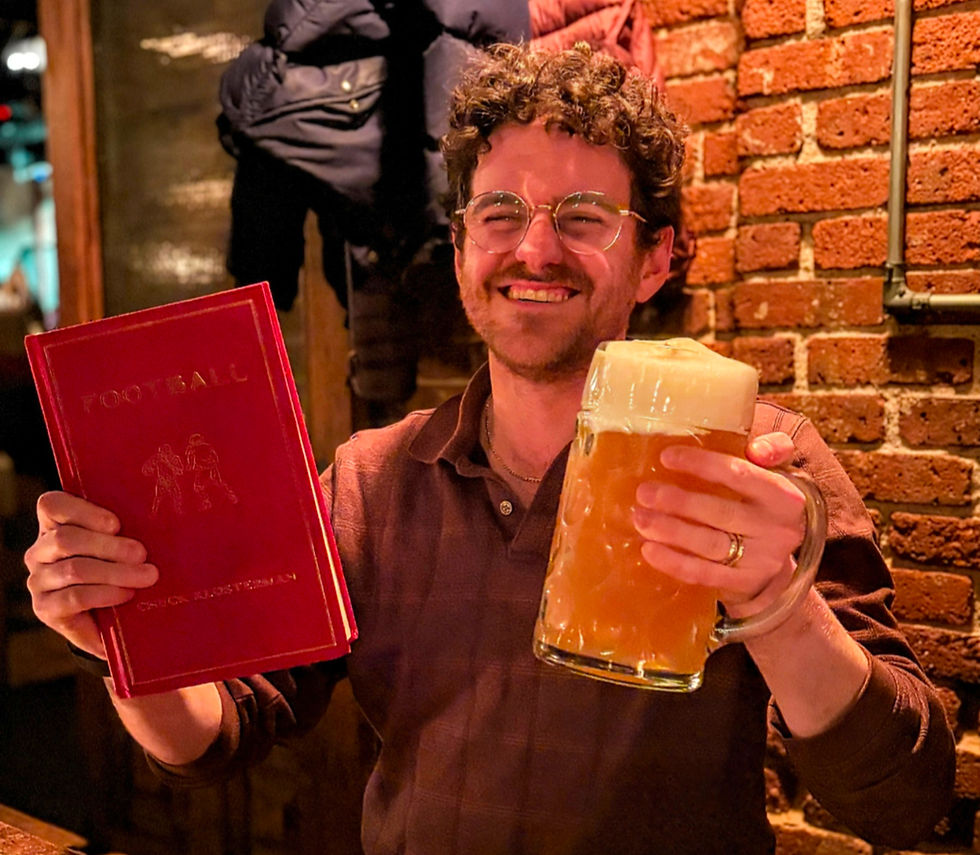
I read A History of the World in 6 Glasses roughly a year before we launched Last Call Library. It unpacks world history through the lens of beer, wine, spirits, coffee, tea, and Coca-Cola. I was immediately hooked and simply couldn’t stop talking about it. After my initial read, I began to see reflections of human history nearly every time I had a glass, mug, bottle, or can in my hand. Sensing that the other guys were drawn to various brews and bars, I had a hunch they would enjoy it as well.
Revisiting Standage’s book for a second time helped me see that the beverages we cherish carry centuries of intrigue that go far beyond their ingredients. Standage positions each drink as a mile marker through time, tying them to historical flashpoints such as the Boston Tea Party and the Whiskey Rebellion. While these events were clearly part of larger ideological conflicts, beneath the surface they also reflected consumption habits and a sharp sensitivity to anything that threatened them.
Standage emphasizes that who controls resources, where and how beverages are made, and what externalities make a drink fashionable can be of profound consequence. If you’re beginning to get the idea that A History of the World in 6 Glasses covers a lot of unexpected territory, you’re correct. Standage takes the reader beyond dates and figures and into agriculture, religion, literature, medicine, philosophy, technology, commerce, and more.

In a way that feels almost like literary time travel, Standage shows how different beverages rise to prominence at different moments in history. From the Stone Age to ancient Greek homes to Enlightenment coffeehouses, each drink plays a pivotal role in shaping culture and civilization. One of my favorite sections explored the rise of Coca-Cola. Apparently, the top three English words universally understood across the world, in order, are “God,” “Titanic,” and “Coca-Cola.”

Paradise Lost feels like stepping through a trapdoor in the East Village and landing in a tropical afterlife. You ring a bell to get in, push past a wall of fake jungle, and emerge into a long, shadowy room glowing with eerie bar light and tucked-away corners. The aesthetic leans hard into post-apocalyptic punk tiki. Bamboo, palm fronds, and horror-movie theatrics abound. There are lightning flashes, werewolf howls, and cocktails that arrive smoking, or on fire.

Underneath the spectacle lies an elite cocktail operation. The menu is rum-forward, inventive, and thoughtfully laid out, with clear notes on ingredients and intensity. Drinks like the "Chaos Magick" combine coffee, pineapple, and ras el hanout, while the "Demerara Dry Float" comes with a genuine side of danger (shot of 151 rum). The popcorn and Spam musubi help soak everything up, and the experience makes you want another lap around the menu before you even close the tab.
Somewhere between a smoking cocktail and a tangent about beer, the conversation drifted toward how drinks subtly define the spaces we gather in. Someone brought up sitcoms, and it clicked immediately. You can walk into a TV bar or café and understand the rules in seconds. Cheers came up first. A place built for being "seen" and where one's drink order is almost a membership card. Then Moe’s Tavern from The Simpsons. You know exactly what you’re getting at Moe’s. Same barstool, same pour, same barflies. Homer drinks to cope. Moe absorbs everyone else’s bullshit. Moe’s was a refuge for the punch-in, punch-out working-class men of the 1990s.
Sitting at Paradise Lost, with thunder cracking overhead and a drink literally on fire, it felt obvious that bars still perform this service. They offer a script. You step inside and decide whether you’re there to disappear, perform, or connect.

From there, the talk shifted to coffee. Monk’s cafe in Seinfeld. Central Perk in Friends. Places where the drinks took backseat to the conversation at hand. Then, on the west coast, there's Frasier. Frasier and Niles treat ordering like theater, each choice a small declaration of taste and identity whereas Martin just wants something familiar and fast. Still, they all meet at the same table.
That’s the throughline, and it’s older than television. What we drink, where we drink it, and how much thought we put into the ritual has always signaled something about who we are in that moment. Paradise Lost helped us put an exclamation point on it all!


Comments